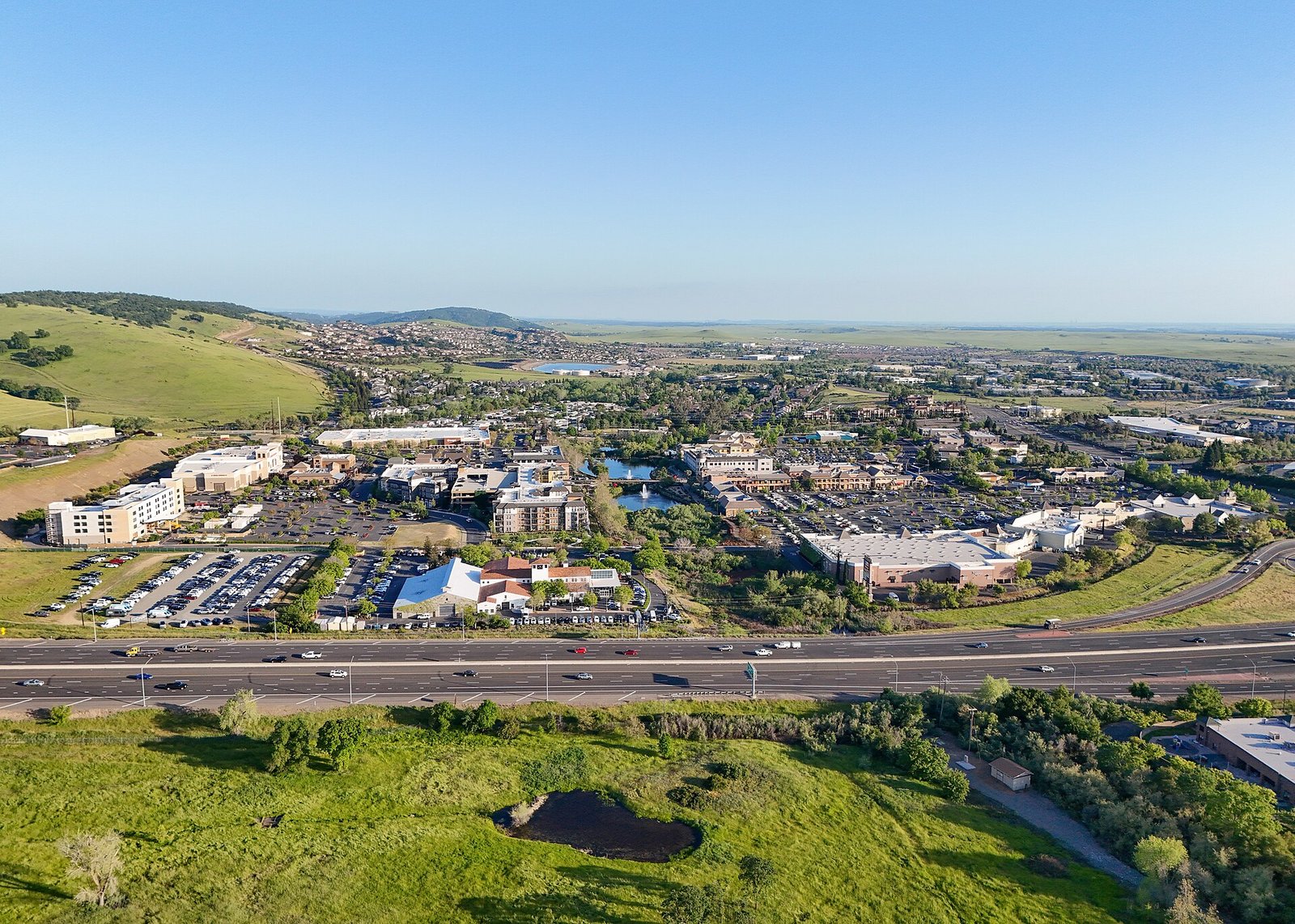
For 2026, the conforming loan limit for a one-unit home is $832,750 in both Placer County (Granite Bay, Roseville, Rocklin) and El Dorado County (El Dorado Hills). Whether you'll need a jumbo loan depends on your loan amount, not the price of the house, so the same home can land on either side of that line depending on how much you put down.
Plenty of move-up homes out here put buyers right around that number, sometimes just over it. Which side you land on changes your loan more than most people expect, so it's worth knowing before you write an offer.
What "conforming" actually means
Every year the Federal Housing Finance Agency (FHFA) sets the maximum loan size that Fannie Mae and Freddie Mac will buy. Loans at or under that amount are conforming. Loans over it are usually called jumbo loans.
For 2026, FHFA set the baseline one-unit limit at $832,750, up $26,250 from 2025. Some high-cost counties get a higher limit, up to a ceiling of $1,249,125, but Placer and El Dorado counties are at the baseline. FHFA's county table lists both at:
- 1 unit: $832,750
- 2 units: $1,066,250
- 3 units: $1,288,800
- 4 units: $1,601,750
Keep in mind the limit applies to the loan amount, not the purchase price. A $1,000,000 home with 20% down is an $800,000 loan, so that's still conforming.
For comparison, the FHA one-unit limit for Placer and El Dorado counties is lower, $764,750 for 2026, per HUD's FHA Mortgage Limits lookup. FHA can still work in these towns, just not on the bigger loan amounts.
What usually changes with a jumbo loan
Jumbo loans aren't bad, they're just different. Since Fannie and Freddie aren't buying them, each lender or investor sets its own rules. In general, this is what tends to shift:
- Down payment: jumbo programs often want more down than conforming loans, though it varies by lender
- Reserves: a lot of jumbo lenders want to see more money left in the bank after closing, measured in months of payments
- Credit and income documentation: usually stricter, and sometimes there's a second appraisal on higher loan amounts
- Pricing: each lender sets its own jumbo pricing, so it can come in higher or lower than conforming depending on the day and the borrower. I won't promise either. You have to compare actual quotes.
A lot of people don't realize that last part. "Jumbo" doesn't automatically mean a higher rate. That's why it's worth shopping a couple of lenders, and it's a big reason I like being a broker who's not tied to one bank.
When you're just over the line
This is the one I see most out here. Say you're buying in El Dorado Hills and your loan comes out around $850,000. That's about $17,000 over the limit.
You've got a couple options:
- Go jumbo and take whatever the jumbo terms are.
- Put a little more down to get the loan to $832,750 or less, so you stay conforming.
- Look at a piggyback setup, meaning a first mortgage at the conforming limit plus a second loan on top. Some buyers use this, but it adds a second payment and has its own rules.
Which one wins depends on your cash, your reserves, and real quotes pulled on the same day. Sometimes putting that extra $17,000 down makes sense. Sometimes it's smarter to keep it in the bank as reserves and go jumbo. I'd run it both ways before you write an offer, so you're not trying to figure it out under contract.
Photo: UncleVinny / Wikimedia Commons, CC BY 3.0
Local things to check in Granite Bay and El Dorado Hills
- Which county? Granite Bay is unincorporated Placer County, and El Dorado Hills is unincorporated El Dorado County. Both have the same 2026 limits, but property taxes, special assessments, and other details come from different county offices.
- Homeowners insurance: foothill and wooded areas can be harder to insure. Get an insurance quote early, because lenders need proof of coverage before closing. Some buyers end up on the California FAIR Plan plus a separate policy, and the CA Department of Insurance explains how that works.
- Total payment, not just the loan: HOA dues and any special taxes go into your debt-to-income math the same way the mortgage payment does. You might qualify for more than you actually feel comfortable paying, and those are two different numbers.
FAQ
What is the 2026 conforming loan limit in Placer County? $832,750 for a one-unit home, per FHFA. Two- to four-unit properties have higher limits.
Is El Dorado Hills the same as Granite Bay? Yes. El Dorado County is also at the 2026 baseline, $832,750 for one unit.
Does a jumbo loan always have a higher rate? No. Jumbo pricing is set by each lender and can come in above or below conforming. Compare real quotes on the same day.
Is the limit based on the home price? No, it's based on the loan amount. Your down payment decides which side of the line you land on.
Can I use FHA in Granite Bay? Yes, if the home and loan amount fit FHA rules, but FHA's 2026 one-unit limit here is lower ($764,750).
If you're shopping for a move-up home in Granite Bay or El Dorado Hills, send me the price range you're looking at and roughly what you're planning to put down. I'll show you where you'd land against the limit and what it looks like both ways. No credit pull for that, it's just a starting point.
If it's easier to talk it through, you can grab a 30-minute call with me here:
https://api.leadconnectorhq.com/widget/booking/Bjs0C1LjigaXwsdBwsVr
Let me know what questions you have.
Kyle
Kyle Butterfield | Loan Officer, NMLS #2717196 | Dwell Mortgage, LLC, NMLS #2426506 | Equal Housing Opportunity | nmlsconsumeraccess.org. This is educational information, not a commitment to lend. All loans are subject to credit approval, underwriting, and program guidelines, and terms and limits can change. No rates are quoted or promised here.