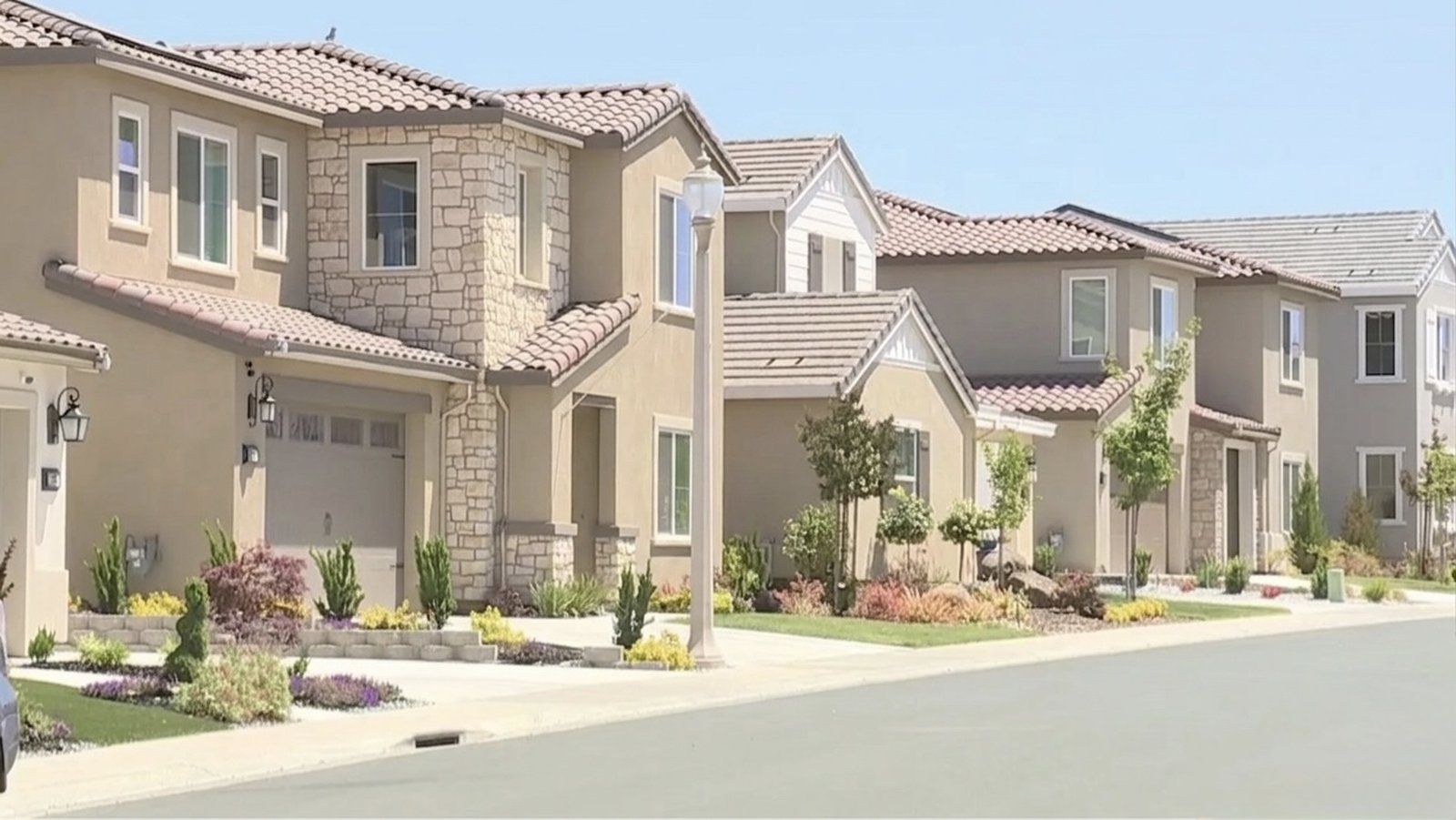
Builders in West Roseville and Folsom Ranch often put a chunk of money toward a 2-1 buydown. That lowers what you pay in year one and year two, then you move to the full note rate from year three on. Whether that beats a price cut or closing-cost help depends on your cash and how long you plan to keep the loan.
Here's the plain-English version of how a 2-1 works, what Fannie Mae requires on conventional loans, and how I'd compare the same incentive dollars three ways before you sign.
What a 2-1 buydown actually is
A temporary interest rate buydown is money set aside up front (by the seller, the builder, or the lender) that covers part of your payment for a set period. On a classic 2-1:
- Year 1: your rate is 2 percentage points below the note rate
- Year 2: your rate is 1 percentage point below the note rate
- Year 3 and after: you pay the full note rate for the rest of the loan
The note itself still shows the permanent rate and payment. The buydown is a separate written agreement. Fannie Mae's Selling Guide is clear that the mortgage documents have to reflect the permanent terms, and the buydown plan cannot change the note.
You can plug example numbers into the payment calculator if you want to see how a payment steps up year by year. Just treat those as modeling tools, not a quote.
You still qualify at the full rate
This is the bigger thing to think about.
On a conventional loan that Fannie Mae will buy, the lender has to qualify you using the note rate, not the bought-down rate. So the lower year-one payment does not let you stretch into a bigger loan. You still have to afford the full payment on paper.
That makes sense once you hear it, but it isn't always how it gets explained on the sales floor. Better to know this early, so you're not counting on the temporary payment to get the approval.
A couple other Fannie Mae rules that matter on these deals:
- Temporary buydowns are allowed on primary residences and second homes. They're not allowed on investment properties or cash-out refinances.
- The rate reduction can't be more than 3 percentage points, and the borrower's rate can't step up more than 1 percentage point per year. A 2-1 fits inside that.
- The plan has to be in writing between whoever is funding it and you.
- If the builder or seller is funding it, that cost counts toward interested-party contribution (IPC) limits. Those caps depend on occupancy and loan-to-value. For a primary residence or second home, Fannie Mae's maximum financing concessions are 3% when LTV is over 90%, 6% from 75.01% to 90%, and 9% at 75% or below (investment properties are capped at 2%). Amounts over the limit get treated as sales concessions and can affect how LTV is calculated. If the lender funds the buydown through a lender credit, it generally doesn't count toward those limits, unless the lender is tied to the builder or seller.
None of that is me guessing. It's from Fannie Mae Selling Guide sections B2-1.4-04 (temporary buydowns) and B3-4.1-02 (interested party contributions).
Same $20,000 three ways (example only)
Just to give you an idea, say a builder in West Roseville or Folsom Ranch is offering $20,000. That number is made up for this walk-through. Real incentives vary by community and by whether you use the builder's preferred lender.
You could usually point that money at some mix of:
- Closing costs, so you bring less cash to the table
- A 2-1 (or other temporary) buydown, for lower payments for the first two years
- A price reduction, if the builder allows it, for a lower purchase price and a smaller loan for the life of the mortgage
- A permanent buydown (points), paying to lower the note rate itself, not just the first couple years
Which one wins depends on your situation:
- Tight on cash to close? Closing-cost help often moves the needle more than a temporary payment break.
- Expecting income to rise, or pretty sure you'll refinance later? A 2-1 can bridge the first two years. Keep in mind nobody can promise rates will be lower when year three hits.
- Planning to keep this loan a long time and the builder will cut price? A price cut helps every month for 30 years, not just 24. The trade-off is a smaller monthly savings that lasts the life of the loan versus more help up front. Which is better depends on how much cash you have.
I'd rather run your actual incentive sheet next to a couple Loan Estimates than argue about it in the abstract. If the builder's package is the better deal, I'll tell you. I'm not tied to one bank. I just want you to actually get the deal you think you're getting.
Photo: UncleVinny / Wikimedia Commons, CC BY 3.0
Buydown offers vs. preferred-lender strings
A lot of the biggest buydown offers are tied to the builder's preferred or affiliated lender. That can still be a fair deal. The trap is comparing the incentive alone instead of the whole package.
What I'd do before you lock anything in:
- Get the incentive in writing as a dollar amount, plus any conditions (preferred lender, rate lock timing, upgrades vs. financing).
- Get a Loan Estimate from the preferred lender.
- Get at least one Loan Estimate from another lender on the same purchase price and loan amount.
- Line up loan costs, credits, and cash to close side by side.
The CFPB's Owning a Home tools walk through how to compare Loan Estimates. Happy to build that comparison for you. I also go deeper on preferred lenders and Mello-Roos in my Roseville new construction loans guide.
When a 2-1 usually makes sense (and when it doesn't)
It can make sense if:
- The full note-rate payment already fits your budget
- You're okay with the payment stepping up in years two and three
- You're using seller, builder, or lender money you weren't going to get another way
- Short-term payment relief helps you through a known transition (new job, training ending, dual income starting)
I'd push back if:
- You can only "afford" the year-one payment
- You were counting on the buydown to help you qualify for more house
- A price cut or closing-cost credit would leave you in a stronger spot for the long run
- The IPC limit means part of a huge buydown would get clawed back as a sales concession anyway
Nothing here is a promise that rates will drop, that you'll refinance, or that any specific structure is right for you. Programs and guidelines change, and every file is different.
FAQ
Does a 2-1 change my loan rate forever? No. It only helps during the buydown period. After that you're on the note rate.
Can I use a 2-1 on an investment property? Not on a conventional loan sold to Fannie Mae. Temporary buydowns are for primary residences and second homes.
Will the buydown help me qualify for a bigger loan? No. Lenders qualify you at the note rate, without using the temporary lower rate.
Is a seller-funded buydown free money? It's real help, but it usually counts toward interested-party contribution limits, and it doesn't lower your loan balance the way a price cut can.
Should I always take the builder's buydown? Not always. Ask for the incentive as a dollar figure and compare it to closing-cost help and a price reduction on the same deal.
If you're looking at new construction in Roseville, Folsom Ranch, Rocklin, or anywhere else around here and the flyer mentions a 2-1, book a 30-minute call and send me the incentive or fee sheet. We'll turn it into real numbers and see which use of that money actually fits. No credit pull until we both agree it's the right time.
Let me know what questions you have.
Kyle
Kyle Butterfield | Loan Officer, NMLS #2717196 | Dwell Mortgage, LLC, NMLS #2426506 | Equal Housing Opportunity | nmlsconsumeraccess.org. This is educational information, not a commitment to lend. All loans are subject to credit approval, underwriting, and program guidelines. Temporary buydown availability and terms depend on the loan program, investor guidelines, and the source of funds. No rates, APRs, or payment quotes are offered here. Example dollar amounts are hypothetical for illustration only.